 |
|
|
| Review by: Amy Krug |
12/15/02 |
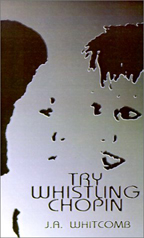 Try Whistling Chopin Try Whistling ChopinISBN: 0759618240 By J.A. Whitcomb J.A. Whitcomb’s debut novel, Try Whistling Chopin, is a panoramic exploration of what it means to be in love, to be a writer, and to be a lesbian. Following the rise and fall of a passionate and caring relationship between two women – one, an openly gay writer, the other, a married mother of two – the novel attempts to examine both their relationship to each other and with themselves. Jennie, a playwright from New York, meets Babs when she inquires about staging a reading of one of Jennie’s plays. Their mutual attraction eventually gives way to a physical relationship, and very quickly, the two are in love – despite Babs’ "straight" life with her husband (an inattentive businessman) and her two self-absorbed daughters. At first, Jennie is mostly unaffected by Babs’ double life, content to revel in the pleasure and happiness of their growing affection. The ease at which the two find time to spend together is almost incomprehensible, given Babs’ family obligations; the two even manage to spend three weeks together in France. In fact, Babs’ major issue with their relationship is her reluctance to be "out," rather than her perceived responsibility to her family. Her unwillingness to openly celebrate their love is ultimately the major stumbling block the two women face. Though the story is interesting and well wrought, a few character flaws tend to bog it down in places. Jennie is a writer, through and through; one of the strongest aspects of the novel is her interest in and fabrications about "bit players" she meets, giving the distinct impression that the story is indeed being told from a writer’s point of view. It seems incongruous, then, that Jennie offers no real observations about her lover; either she is content to not think too hard about the implication Babs’ double life has on their relationship or we are not privy to her thoughts. We also gain little insight into Babs and the emotional turmoil she must be going through dealing with their relationship. We don’t really know throughout the novel if she’s tempted to renounce her sham marriage and run off with Jennie, although we do know that she loves Jennie deeply. And when their long-term relationship eventually takes a turn from blissful to difficult, we’re left wondering what changed, and when. Though the character development could be a little more satisfying, Whitcomb’s strengths lie in her descriptions of people and settings. She paints vivid visual pictures with few well-chosen words, giving a definite mood and feel to various parts of the novel. Her descriptions of the couple’s French holiday are especially involving. She also does a very good job of capturing the dynamic of the backstage off-Broadway theater culture, though descriptions of the creative process, the business aspect of the theater, and the performances Babs and Jennie are involved in. Whitcomb effectively draws on her own experience as a playwright and it lends an air of authenticity to the novel. Though the characters in Try Whistling Chopin could be a little more developed and the plot tightened somewhat, it is still an overall interesting read. Most people, gay or straight, can identify with Babs and Jennie and the complexity of their relationship. Ultimately, Whitcomb reminds us that love isn’t easy, and that anything worth having is worth sacrificing for. |
|
|
|