| Review by: Ashlie Sponenberg |
12/01/01 |
|
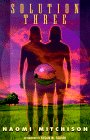
By Naomi Mitchison Scottish author Naomi Mitchison’s long publishing career began in the 1920s, and her early historical novels impressed readers with the minute detail in which ancient worlds, both fictional and historically ‘real’, were imagined. Mitchison had a talent for bringing the distant past to life as a setting for engaging, dramatic plots and personal dramas, which were recognisable as projections of her contemporary, interwar political concerns: feminism, socialism and anti-Fascism. Although her 1935 socialist novel, We Have Been Warned (London: Constable), concludes with a female character’s mystical vision of a possible Fascist take-over in Britain at the end of the 1930s, Mitchison did not turn to ‘futuristic’ fiction until the 1970s, when she published two science fiction novels, Solution Three and Memoirs of a Spacewoman. In both texts, she continues the creation of vividly imagined, fictional communities as the temporally-distant settings for her examination of debates crucial to a contemporary, late twentieth century audience. Solution Three, first published in 1975, speculated
about the social effects of such technological innovations as
human cloning, The ‘Solution Three’ of the title refers to the current phase of progress on the path to utopia and is an adaptation of the previous, less appropriate, Solutions One and Two. Solution Three is also imperfect: war and prejudice still exist, crops are failing after certain necessary varieties were bred out, surrogate mothers are developing inappropriate feelings of attachment to their Clone children, and some Clones, despite undergoing a period of conditioning which replicates the experiences of Him and Her, are turning out to be unique, unpredictable individuals. Councillors must consider the possibility that the current path may not lead to the intended utopia based on peace and understanding, and that a Solution Four may be necessary. Mitchison’s future world is neither utopia nor dystopia. Instead, she has imagined a society in process. Unlike the hopeless, autocratic, technocratic dystopias of Huxley and Orwell, this is a world in which resistance is not futile. Solution Three posits a hopeful view in its portrayal of active, critical participants seeking to improve their eugenic, technologically-advanced culture. Mitchison’s text leaves the way clear for alternative futures to the one she has imagined, suggesting that utopian ideologies must be capable of adaptation and revision if they are to succeed. Solution Three relies on multiple narrative perspectives to describe this problematic future. The reader encounters Mutumba, the lesbian wise-woman leader of the Council; the heterosexual geneticists, Miryam and Carlos, and their small children; the surrogate mother, Lilac, who dreams of a unique future for her Clone infant, Ninety; and Anni and Kid, two young adult Clones coping with deviant heterosexual desires. Mitchison imagines women in positions of influence within a society which is largely matriarchal. Women are appreciated as diplomats, scientists, and mothers, but the text moves beyond a woman-centred approach in its examination of the effect new technology has on male and female sexuality and gender identities, and on family and domestic relationships. Mitchison continues the sensual writing of her controversial early texts in Solution Three by imagining sexual desire between pregnant women, and same-sex and opposite-sex couples in equal measure. The futuristic environments of Mitchison’s fictional world are also vividly realised. Landscapes and architecture throughout the world are rendered to provide the reader with views of farmland and cities reorganised in accordance with the Council’s global utopian goals. These policies also affect reallocation of office and personal spaces, with large gardens given to the privileged Clone mums and cramped uncomfortable quarters assigned to deviant Professorials. Mitchison’s rooms feature the large two-way communication screens seen in 1984, but without the Big Brother implications; privacy is still possible in her future. Huge screens, spray-on clothing and malleable furniture exist alongside children’s building blocks, so that the future world maintains a slight correspondence with that familiar to Mitchison’s audience, emphasising the links between the fictional future and the world as it exists in the late twentieth century. Her attempt at writing a unique Clone-language is a detail which now appears dated, as much of her vocabulary seems to have been borrowed from mid-twentieth century American slang, but I found this to be the only jarring aspect of descriptive detail which is otherwise convincing. The feminist and gender politics of Mitchison’s text are evident in her depictions of women in positions of global authority, of same-sex friendships and partnerships as cornerstones of society throughout history, and in her insistence that domestic life ought to be respected as a political sphere. The feminist perspective of her text cannot be separated from the novel’s examinations of globalisation, genetics, and technocracy. However, the personal dramas of Mitchison’s characters keep the reader absorbed in the sphere of her political argument, engaged in a debate about ideas which are still crucial to her audience a quarter of a century later. Memoirs of a Spacewoman is a more limited novel, focusing on the colonialist possibilities of scientific exploration as well as on gender and sexuality. This text is organised as a series of case-studies through the single narrative perspective of Mary, a space explorer and inter-species communicator. Mary and the other explorers set out to increase ‘Terran’ (‘Earthling’?) understanding of species on other planets, guided by a strict policy of ‘non-interference’. The drama of these case-studies arises when non-interference becomes difficult, such as when the explorers feel a desire to stop wars between apparently ‘good’ and ‘evil’ competing species. This novel is not centred round the delicate balance between utopia and dystopia. Instead, Mitchison examines human attitudes towards the Other, through the creation of a scientific culture in which all difference is embraced through the practise of a complete empathy which does not challenge, or attempt to engage the sympathies of, the Other. It is a Cixousian, feminine approach to knowledge, which gives itself up to the task of understanding without expecting to be understood by the Other in return. Empathy proves a difficult challenge to the explorers, who cannot always suppress their own value systems and ways of knowing when attempting to empathise with species on other planets. One case-study describes Mary’s experience of the Other through embodiment: she accepts an alien graft onto her thigh, an experimental form of surrogate motherhood. Other earth mammals, such as dogs, pigs, and horses, accept the grafts and Mary communicates empathetically with these surrogate mothers, emphasising the universality of maternal feeling. A hermaphroditic Martian, Vly, also accepts a graft and becomes temporarily female in the process. Mary’s scientific community values the experiences of pregnancy and maternal love and considers them to be worthy ways of gaining knowledge of the Other. Always interested in taboo forms of sexuality, Mitchison describes the sensuality of motherhood as Mary develops an erotic, almost incestuous, relationship with her graft, named Ariel: ‘By now Ariel was more than three feet long. It liked to be as close as possible over the median line reaching now to my mouth and inserting a pseudopodium delicately between my lips and elsewhere’ (54). Mary’s skill as a communicator is partially attributed to her sex. Women are seen as more in tune with life forms: ‘I may be out of date, but I always feel that biology and, of course, communication, are essentially women’s work, and glory… somehow the disciplines of life seem more congenial to us women’ (18-19). Likewise, older, more invasive and destructive ways of knowing are represented in the text as masculinist and imperialist. Mitchison’s novel acts as a critique of the current state of the scientific method and its claims toward objectivity at the expense of subjectivity, which is written off as an invalid way of knowing. Her attitudes toward science may have been shaped somewhat by the fact that, as an adolescent, she was shut out of the scientific research of her chemist father and biologist elder brother. This novel is as detailed and as clearly imagined as Solution Three. Memoirs is especially impressive when Mitchison’s attempts to describe the sensations of recognition and empathy. The alien life forms encountered in this text are often conveniently similar to recognisable earth species, such as starfish, wood lice, and caterpillars; in this respect, her worlds are not as ‘other’ as the worlds of other SF writers. But her sensuous, detailed descriptions of empathy between humans and earth mammals and plants, human-like Martians, and spinning radial swamp-dwellers of other planets all contribute to the illusion of the plausibility of this futuristic world in which difference is valued and feminine ways of knowing are employed in the most advanced types of scientific research. Memoirs of a Spacewoman, London: New English Library, 1976; reprint edition London: The Women’s Press, 1985. This text is not currently available in print, but is featured here because it can sometimes be found at speciality feminist and SF bookshops, and is, I think, worth the search! The book can also be found fairly easily at the Amazon.com "zshop" link above-- however, please let the editor know if the link goes down. |
|
|
|
|
|