 |
|
| Review by: Natasha Whitton |
6/01/01 |
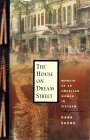 This is a story about Vietnam, but it's not about the war there. It is a story about Vietnam much later, and about one American woman's life in that country. It's the story of a love affair with a place, a love affair that I never would have predicted. I was born in 1962, and when I was a kid, the words "Vietnam" and "war" were interchangeable. People asked questions like, "When will Vietnam be over?" and, for me at least, such a question didn't sound strange at all. I'd never heard of "Vietnam" except as war, and the place itself conjured nothing in my mind but dust and blood and wailing faces. (1) As Dana Sachs points out in her preface to The House on Dream Street, the story that she has to tell about Vietnam is not one of war, but of love--for a people and a country. In 1989 when she was 26 and backpacking through Asia with a friend, Sachs had the opportunity to visit Vietnam shortly after it was reopened to the West. What she found during this brief visit was a country renewing itself from ruins. The lush vegetation of the countryside had begun to cover the scars of war, and in the urban centers the economy was beginning to show signs of improvement. In March 1992, Sachs moved to Hanoi. She had not initially intended to choose the North of Vietnam over the South, but she had more contacts in Hanoi, including Nguyen Thi Tra. Tra had been Sachs' teacher at a Vietnamese language intensive, and they had struck up a firm friendship. Tra studied business at the University of Michigan, but her husband and son lived in Hanoi. When Sachs decided to move to Vietnam, Tra's house was the first place that she went from the airport. Once she was settled in a boarding house, Sachs had to face the challenges of life in a country where she was always on display as a foreigner. She managed to find a job teaching English and found a Vietnamese language tutor to help her improve her communication skills, but many days she felt like passing the hours in her comfortable room rather than in the crowded streets below. In an effort to conquer her fears and begin to get around, she learned to ride a bike--no small task in the narrow and congested streets of Hanoi. As she forced herself to venture into the streets, Sachs often found herself facing even greater problems. She describes one such instance, "It would be more dramatic to say that my first major crisis in Vietnam occurred when I was accosted by a gang of drunken war veterans, or when I was suddenly overcome by a life-threatening disease, but it didn't happen that way" (47). Instead her crisis was a small embryonic bird. With her newfound mobility, Sachs had stopped at an unfamiliar tea booth. She pointed at what she thought were boiled eggs and waited to be served. When a bowl was passed to her, she found what appeared to be the aborted fetus of a chicken. When she carefully explained, as Tra had taught her, "I don't know how to eat it," the proprietress insisted that this dish was a delicacy and very good for her. That evening, trying to explain her horror to Tra, she received an unexpected response: Tra nodded. Now she understood. "That's happened to me in the States, too," she said, putting her hand on mine. "People try to get me to eat something disgusting. It's awful. I tell them I don't know how to eat it, but they don't understand." I tried to imagine which American dish the gristle-loving Tra would find impossible to eat. And how could anything be worse than an embryonic baby duck? "Mashed potatoes," Tra said. "All that butter and cream--disgusting! How can people eat that? (48-49) Sachs also developed very close relationships with the couple who ran the boarding house where she lived. Through the birth of their second son, she was able to see the inside of a local hospital and share in the joy and pain of the family. But perhaps Sachs' most significant interaction with her new home came when she unexpectedly fell in love with a young motorcycle repairman. Her affair forces her to consider her commitment to Vietnam as opposed to the United States in addition to the more personal similarities and differences between herself and her partner. Her memoir not only provides a vivid picture of Vietnam as it was in the 1990s, but delves into the heart of human nature. Her friendships with various citizens of Hanoi show these people experiencing many universal issues--divorce, unemployment, financial crisis, the death of loved ones, and the illness of children. As she comments in her epilogue, I had learned, finally, that I am not so different from all the other people in this world. The idea was simple, and obvious, and I'm sure that my teachers tried, again and again, to teach it to me years ago in school. But it is one thing to hear something and another to figure it out for oneself. I had to spend some time in Vietnam to learn it. (345) I had the pleasure of hearing Dana Sachs speak and answer questions at the 2001 Sigma Tau Delta Convention in Corpus Christi, Texas. She read several passages from The House on Dream Street and talked about her love affair with a country initially foreign to her. What I enjoyed most about her presentation and what I came to admire most in her memoir was the honest manner in which she described her experiences--not only the tangible, physical reality of place but her own psychological responses to those surroundings and her understanding of the emotional reactions in those around her. Thus, The House on Dream Street should be of interest not only to those fascinated by Vietnam or travel but also to students of the human spirit. Dana Sachs. The House on Dream Street. Chapel Hill: Algonquin Books, 2000. |
|